Arash Aliasghar and Oubai Elagab, recent recipients of Elmeryl Davies Memorial Scholarships, have much in common. They came to this country in 2021 to earn doctorates in environmental engineering. They both study at Stevens Institute of Technology in Hoboken and expect to earn their degrees this December. Furthermore, their research projects involve developing technologies to facilitate remediation of recalcitrant contaminants.
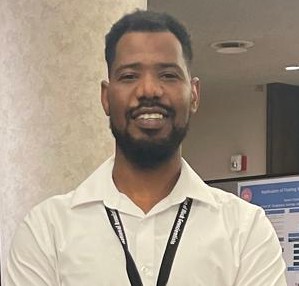 Environmental engineering is Oubai’s second career. For two years, he was a petroleum engineer in his native Sudan: “Since I was a child, I was curious about what happens beneath the ground,” said Oubai. He witnessed exciting things below the ground working in the oil industry, but disturbing things at ground level. “I observed improper disposal of chemical additives used in oil well drilling. In some areas where I worked, environmental regulations were not strictly enforced. People in nearby villages developed serious health issues caused by drinking polluted water. It reshaped my career goals. I decided I would use my engineering knowledge to protect people from the effects of pollution.”
Five years ago, Oubai came to the States to research methods to remediate chlorinated volatile organic compounds (CVOCs) in low permeability formations. He chose to study at Stevens because of the reputation of his advisor, Prof. Cheng Chen, whose research focuses on particulate amendment transport in clay-rich formations using hydraulic fracturing.
“Hydraulic fracturing is used to improve permeability,” said Oubai. “However, achieving a uniform distribution of reagents within the fracture space is challenging. For my research, we inject GAC (granular-activated carbon)-based amendments into a lab-scale fracture apparatus. By varying design parameters such as injection flow rate and mixing ratio, we aim to optimize amendment distribution and improve contact between reagents and contaminated soil.”
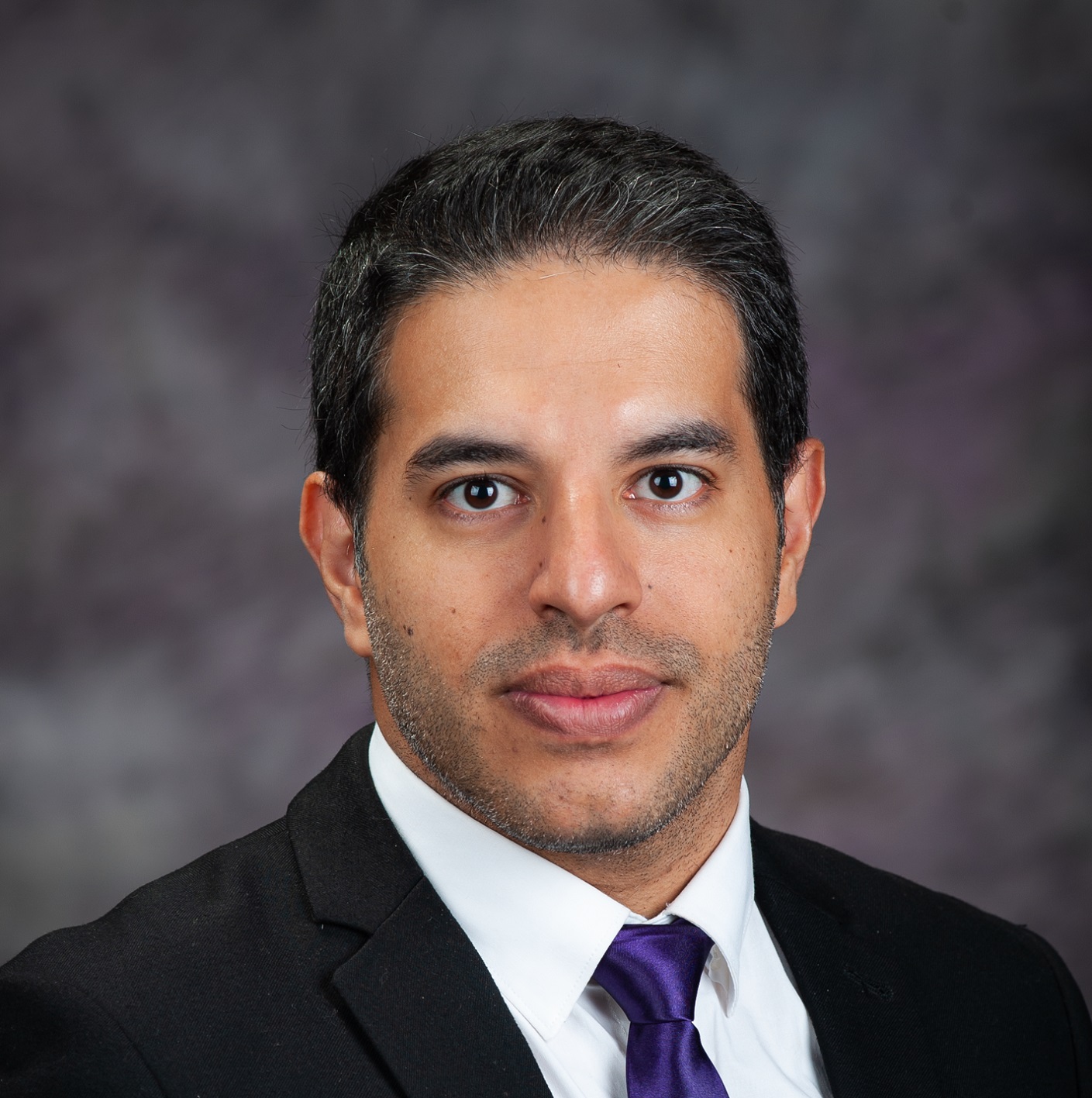 Like Oubai, Arash spent two years working in a laboratory, in his case a lab on the campus of the University of Tehran in his native Iran. His lab work piqued his interest in the remediation of PFAS. He decided to enroll in a Ph.D. program in Manhattan: Manhattan, Kansas, that is, at Kansas State University. He left KSU after just one year of study. A self-described “city boy,” he wanted to be near the “big” Manhattan. When he learned that the esteemed Prof. Dips Sarkar was doing PFAS remediation at Stevens, he knew where to go. Before you can say “polyfluoroalkyl,” he was enroute to New Jersey.
Arash’s research has two parts. The first part involves optimizing phytoremediation systems for PFAS, nutrients and heavy metals removal. The second part focuses on circular economy and resource recovery approaches by addressing what can be done with biomass after extraction. Arash converts spent plant biomass generated during wastewater treatment into biochar and investigates its application as a low-cost, sustainable adsorbent for PFAS removal. This approach aims to transform remediation waste into a value-added resource, supporting a closed-loop and more sustainable wastewater treatment system while reducing secondary waste generation and promoting resource recovery.
Both Arash and Oubai will be seeking employment in the private sector upon receiving their doctorate degrees. Oubai has a summer internship with Loureiro Engineering Associates, a Connecticut-based consulting firm. Arash is currently looking for a summer internship to gain hands-on experience in water and wastewater treatment and PFAS remediation.
Messrs. Elagab and Aliasghar are performing cutting-edge research in environmental remediation, and the LSRPA Foundation is happy to promote such research in New Jersey with its Elmeryl Davies Scholarships.